

Insights
Our long-form review articles on key matters of interest to members

Key policies in the NPPF
The following is a blog recently written by the lawyer Simon Ricketts which is intended to help developers to get a planning application approved. It is helpful for London Forum's members to understand parts of the new NPPF and for considering its content when assessing whether or not a proposed scheme for their area has been designed and presented in a way that takes account of the key NPPF policies identified in the blog. We reproduce the blog by kind permission of the author.
To maximise the prospect of securing planning approval, scheme promoters need to ensure that their schemes press as many of the relevant buttons in the new NPPF as possible.
I have counted 21 of them, which I set out below. Most have detailed qualifying criteria to meet, but hopefully this will allow you to see the wood for the trees in applying the new policy framework ...

Garden Annexe, Caravan, or Mobile Home?
Tim Catchpole of the Mortlake and East Sheen Society writes...
Our Society has had a recent experience which we would like to share with other London Forum members who may or may not have had a similar experience.
As a rule we do not normally make comments on planning applications for any development that is not visible from the public realm. However, the application in question was for planning permission for the ‘construction of a granny annex ancillary to the main house.’ We were not going to comment until neighbours approached us and drew attention to the size of the annex and the loss of trees. So we sent a representation to the Council recommending refusal in accordance with its policies against back-garden development and, sure enough, permission was accordingly refused.
However, a few days later a new application arrived for the same site, this time for a certificate of ...
![TBM 'Florence' [Photo: HS2 ltd]](https://i0.wp.com/www.londonforum.org.uk/wp-content/uploads/2026/06/HS2-Florence.jpg?fit=300%2C200&ssl=1)
HS2 Reset
The High Speed 2 railway has had numerous resets yet it clings on to its existence albeit in a truncated form. The latest announcement by the Secretary of State for Transport followed the publication of the Lovegrove report into what went wrong, and some interim recommendations from the on-going review of how the project should be reset that is being conducted by HS2’s CEO, Mark Wild. The Lovegrove report is useful because it finally nails the claim repeated over many years by politicians and many of those directly involved in the HS2 project, that its core aim is to increase railway capacity. It was designed for high speed, hence the name; indeed for higher speeds than anywhere in Europe.
HS2 has incurred all the extra cost that goes with adherence to a rigidly straight line in order to maximise speed. One of the interim recommendations is to reduce the speed ...
![BID's in London [image: LSE]](https://i0.wp.com/www.londonforum.org.uk/wp-content/uploads/2026/06/BIDs.png?fit=300%2C216&ssl=1)
What are BIDs doing for Town Centres in Central and Outer London?
Earlier this year, London Forum organised a very interesting open meeting with members about the state of London’s High Streets and the night-time economy. One of the presenters was from a BID (Business Improvement District), highlighting their work in improving business areas in central London. That raised a question, what are BIDs doing in outer London?
Once a BID has been voted in by local businesses it is funded by a supplement to the business rates paid in the area. Of the 76 BIDs in London, around half are in central London typically with an income of over £1m pa, though a few have more than £3m. Some of the large town centre BIDs in outer London also have an income of around £1m; but many of the smaller ones operate with around £300k.
But there is more to a BID than just income. They have convening power to create ...

Planning for Telecoms Masts
Most of us now carry smart phones around with us all the time: they have become an essential part of modern life. For most of the time when we are out and about, using our phones depends on signals from telecoms masts. Since the first dozen masts were erected by Vodafone in 1985 to cover London and the M4 corridor, they have become ubiquitous across the country. In London alone there are estimated to be some 7,000 of the monopole masts we see on streets and the tops of buildings.
This article provides an account of how the legislation relating to telecoms masts has evolved over the past four decades. It also presents a case study from East Sheen in the borough of Richmond upon Thames, which highlights some of the issues we currently face. It would be useful if our member societies could provide information about their experiences in ...

Architects should rejoice that Britain’s latest new towns aren’t new towns at all
By Ben Derbyshire, chair at HTA Design, former RIBA president, and President of the London Forum.
I don’t generally play for laughs, but I got one anyway at Design West’s Arnolfini conference on Labour’s then-new housing plans when I urged the audience not to hold their breath waiting for the twelve promised new towns. We still haven’t finished the ones Richard Crossman began in the 1960s. As it turns out, we needn’t have worried because of the seven finally announced, all but one are not new towns at all, but much more sensible urban extensions.
Housing ministers seem unable to resist Ebenezer Howard’s romantic vision in the Garden City Movement of “restoring the people to the land” as the cure for social ills. Today’s half‑hearted imitations borrow only the rhetoric of garden cities, ignoring Howard’s business model in which land value uplift was captured and reinvested in the community, ...

Insights newsletters
PDF versions of the earlier ‘newsletter format’ editions of Insights are shown below. The archive of the Insights forerunner NewsForum is available here, and all editions are included in the website search here:
| Image | Title | Type |
|---|---|---|
| pdf | |
| pdf | |
| pdf | |
| pdf | |
| pdf | |
| pdf | |
| pdf | |
| pdf | |
| pdf | |
| pdf | |
| pdf | |
| pdf | |
| pdf | |
| pdf | |
| pdf | |
| pdf | |
| pdf | |
| pdf | |
| pdf | |
| pdf | |
| pdf |


Development viability issues
The Housing and Planning Minister Matthew Pennycook MP acknowledged in a speech the ...

More information for members
We have made available three additional links to information in our website Resources facility in the 'Other' section.
They are ...
![School [Freepik]](https://i0.wp.com/www.londonforum.org.uk/wp-content/uploads/2026/02/School.jpg?fit=150%2C94&ssl=1)
School closures
London Councils, representing local authorities in the capital, produced a report 'Finding the Balance' on falling education class numbers and ...

Key policies in the NPPF
The following is a blog recently written by the lawyer Simon Ricketts which is intended to help developers to get a planning application approved. It is helpful for London Forum's members to understand parts of the new NPPF and for considering its ...
Most Popular This Week


Member News


-
Annual General Meeting 2026
📆 Wed 28th October | 18:30 - 20:30
🚩 77 Cowcross Street, EC1M 6EL (map)
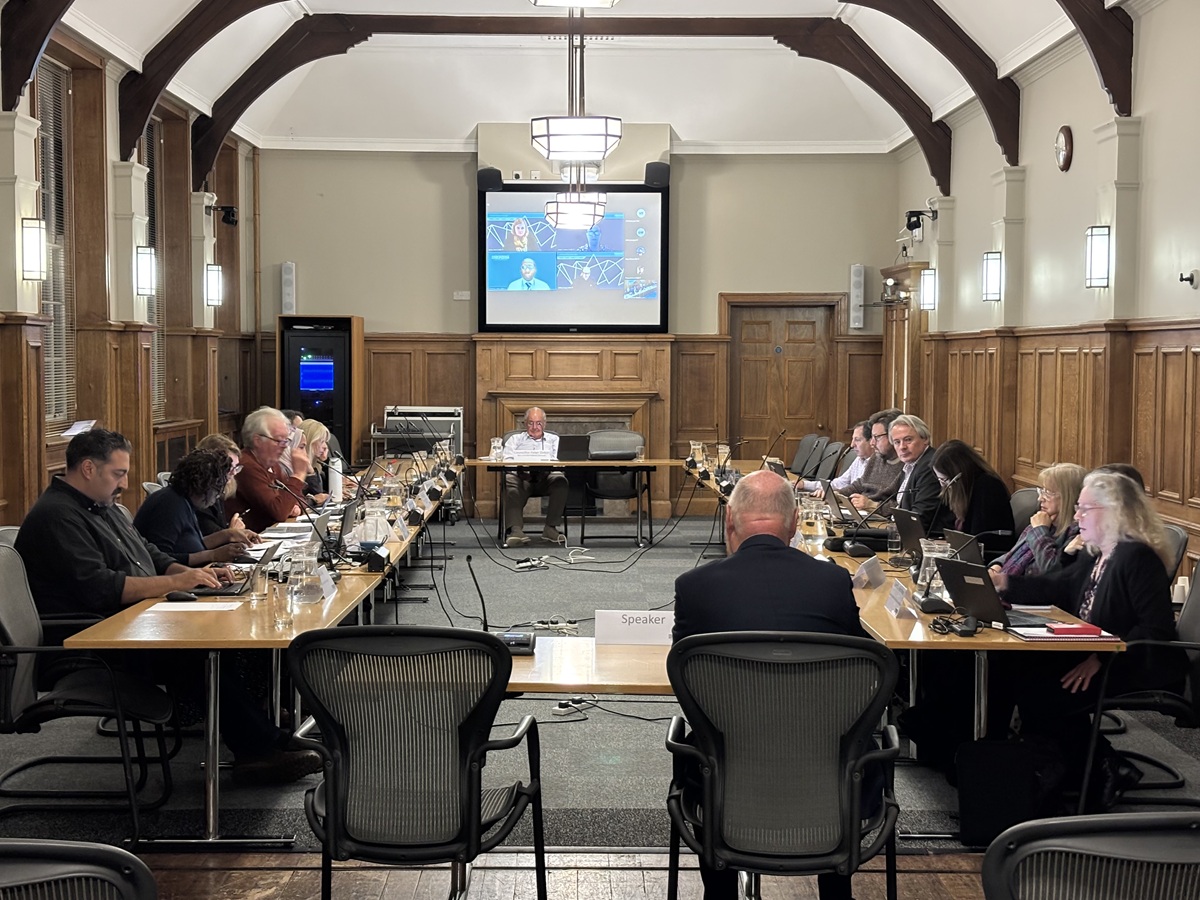
Wednesday 28 October 6.30pm at The Gallery, 77 Cowcross Street, EC1M 6EL Notice is hereby given to member societies of the 2026 AGM of the London Forum of Amenity and Civic Societies. Doors open for networking, drinks and nibbles from 6.00pm. Please book your place(s) using the booking facility ( https://www.londonforum.org.uk/events/agm-2026#booking ). Agenda Welcome and Introduction Approval of the Minutes of the AGM of 16 October 2025, available here ( https://www.londonforum.org.uk/agm-papers/ ) Chair’s Report – Chair Michael Jubb Financial Report – Treasurer Ali Dezyanian Approval of the Annual Report and Accounts for 2025-2026, available here ( https://…
Featured Pages